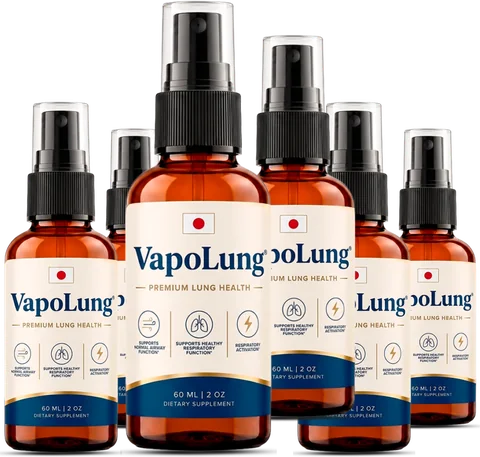
Mullein (Verbascum thapsus) is a tall biennial plant known for thick, soft, silvery-green leaves and a spire of yellow flowers. The brand lists Mullein leaf extract, a 10:1 extract, as one of three named ingredients in VapoLung™. This guide covers only the plant itself: its botany, where it grows and how the label words it.
A plant you have probably walked past · Why the leaves feel like velvet · Where it comes from and where it grows · What 10:1 extract means on a label · Where it fits in the formula
- Mullein is Verbascum thapsus, a biennial with fuzzy rosette leaves.
- It is native to Europe and Asia and now grows across North America.
- A 10:1 extract is a concentrated form of leaf material.
- The brand lists it as one of three named ingredients, with no amounts given.
A plant you have probably walked past
If you've hiked a dry roadside or a sunny field edge, you may have spotted mullein without knowing its name. In its second year it sends up a straight, sturdy stalk that can climb well above head height, topped with a dense spike of small yellow flowers.
Gardeners and naturalists sometimes call it great mullein or flannel plant, and the second name hints at its most memorable feature: the leaves.
Its habits are memorable. Mullein often colonizes bare ground first, shows up in gravel lots and along fence lines, and seems to appear out of nowhere. A single plant can drop a great many tiny seeds, which is why a patch can pop up the following season. Its flowers open a few at a time rather than all at once, so a stalk can bloom for weeks.
Why the leaves feel like velvet
Mullein is biennial, meaning it lives two growing seasons. In year one it forms a low rosette of broad, gray-green leaves, often as wide as a dinner plate. Each leaf is covered with fine, branching hairs that give it a felt-like, velvety surface.
Those hairs are the reason the plant looks silvery in sunlight. In year two the leaves shrink up the stalk, the flowers open from the bottom upward, and the plant sets seed before completing its cycle.
Look closely at a leaf and you'll see how dense the hairs are. They overlap like felt, and a gentle brush with your fingertips leaves the surface feeling like flannel. Many people recognize the plant by touch alone, even before they've seen the flower stalk.
Ready to start your routine?
VapoLung: a once-daily oral spray, four sprays each morning, with a 60-day money-back guarantee.
Order VapoLung NowWhere it comes from and where it grows
Verbascum thapsus is native to parts of Europe, North Africa and Asia. It arrived in North America centuries ago and has since spread widely, favoring sunny, well-drained, disturbed ground such as gravel, slopes and field margins.
That hardy, adaptable nature is why you'll see it in so many places. The genus Verbascum includes many species, so labels pair the common name with the Latin binomial to point at one plant exactly.
In the garden, mullein is often grown as a dramatic accent. Its architectural spikes stand tall at the back of a border, and visiting bees and other pollinators are drawn to the blossoms through the summer.
What 10:1 extract means on a label
An extract is made by processing plant material so that its components are gathered in a more concentrated form. A ratio like 10:1 is usually read as roughly ten parts of starting plant material for every one part of finished extract.
The ratio describes how the ingredient was prepared, not how much sits in a bottle. The brand lists Mullein leaf extract (Verbascum thapsus, 10:1 extract) among three named ingredients, and the amount inside the proprietary blend isn't stated. The formula page shows the full lineup.
Reading extract ratios on different labels helps you compare like with like. A higher first number tends to mean more starting material per unit of finished extract, which describes how the ingredient was made.
Where it fits in the formula
In the VapoLung formula, mullein leaf extract appears alongside Ginger root extract and Organic lemon extract. The brand describes the blend as globally sourced botanical ingredients in a daily oral spray, taken as 4 sprays (0.60 ml) once each morning.
For plain-language background on botanical ingredients and label terms, the NIH Office of Dietary Supplements is a good starting point, and the product overview puts the plant into the context of the full product.
Taken together, the plant story is simple: a hardy biennial, a soft leaf and a clear label name. The spray is a daily morning habit, and this ingredient is one piece of its lineup.