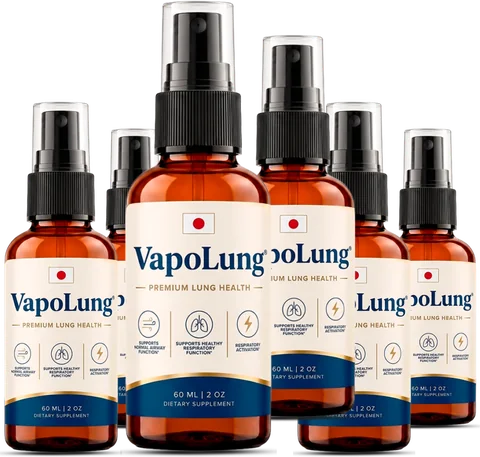
Ginger (Zingiber officinale) is a tropical flowering plant whose knobby underground stem, called a rhizome, is sold as ginger root. Labels list it by common and Latin name. The brand names Ginger root extract as one of three ingredients in VapoLung™, with amounts inside the proprietary blend not listed.
A root that isn't quite a root · Origins and growing regions · Ginger in the kitchen · How labels list ginger · Where it sits in the formula
- Ginger root is botanically a rhizome, an underground stem.
- Zingiber officinale is the Latin name to look for on labels.
- Ginger has a long culinary history, from baking to stir-fries.
- The brand lists Ginger root extract as one of three named ingredients.
A root that isn't quite a root
The knobby, beige piece you buy in the produce aisle is called ginger root, but botanists classify it as a rhizome: a thick stem that grows horizontally underground and sends up leafy shoots. Slice one open and you'll see the pale yellow flesh and the fibrous grain running through it.
The leaves above ground are slender and grass-like, and the plant can reach about three feet tall in warm, humid conditions.
Choosing ginger at the store is its own small skill. Look for firm, plump pieces with smooth skin; creased, soft ginger is past its best. Store it in a cool, dry spot and it keeps for a good while.
Origins and growing regions
Zingiber officinale belongs to the Zingiberaceae family, shared with turmeric and cardamom. It is believed to have originated in tropical Southeast Asia and has been cultivated for centuries across warm regions of Asia, Africa and the Caribbean.
It thrives in rich, moist soil with steady warmth, and growers usually harvest the rhizomes after several months. Fresh, young ginger has thin skin and a mild bite, while mature ginger has tougher skin and a sharper aroma.
Trade routes carried ginger far beyond its homeland long ago, and it became one of the best-known spices in markets from the Mediterranean to East Africa. Today it's grown on every warm continent, and it remains a staple in home kitchens worldwide.
Climate shapes quality in the field: warmth, humidity and loose, rich soil let the rhizomes swell. Growers often plant small pieces of rhizome, each with a bud, and wait months for the harvest.
Ready to start your routine?
VapoLung: a once-daily oral spray, four sprays each morning, with a 60-day money-back guarantee.
Order VapoLung NowGinger in the kitchen
Few ingredients travel across cuisines as easily. Ginger shows up grated into stir-fries, simmered in curries, candied for desserts, pickled beside sushi, baked into gingerbread and stirred into ginger ale and syrups.
The USDA's FoodData Central database lists raw ginger root if you'd like to look up its standard food entry.
A few ideas for using fresh ginger: a thin coin in a pot of rice, a teaspoon grated into a salad dressing, or a handful of matchsticks fried crisp as a garnish. Peeling is easy with the edge of a spoon, which glides over the knobs and corners. Ground ginger, by contrast, is made from dried rhizome and has a warmer, spicier profile than fresh, which is why recipes specify which one to use.
- Fresh: sliced, grated or minced
- Dried and ground: baking and spice blends
- Candied or crystallized: confections
- Pickled: a classic sushi companion
How labels list ginger
Supplement labels often use both a common and a Latin name so you can tell exactly which plant you're reading about. That's why this one appears as Ginger root extract (Zingiber officinale).
The word extract signals that the plant material was processed into a concentrated form. Words like root, rhizome, powder and extract are not interchangeable, so reading them closely helps you compare labels accurately. Our label guide shows how this ingredient sits in the list.
Another label tip: look for the plant part. Ginger root is clear, but some ingredients say leaf, seed, bark or flower. The plant part is half of the identity, and the Latin name is the other half.
Where it sits in the formula
The brand names Ginger root extract alongside Mullein leaf extract and Organic lemon extract in a proprietary blend. Amounts for each ingredient aren't broken out, so this post sticks to botany, origin and kitchen background.
The product itself is a daily oral spray: 4 sprays (0.60 ml) once each morning, in a 60 ml bottle described as about a 30-day supply. See the product overview for the full picture.
Taken together, the three named ingredients form the brand's proprietary blend in VapoLung. You can read about the other two in our guides to mullein leaf and organic lemon extract.